Introduction to Men’s Mental Health Month
Every year, the spotlight shines on men’s mental health for one important reason—too many men suffer in silence. Men’s Mental Health Month is more than just a campaign; it’s a call to action. It is all about breaking the silence, ending the stigma and making a safe place where men can speak about the issues that society wants them to keep to themselves.
Why Men’s Mental Health Deserves Special Attention
The unspoken rule of men is frequently to grow up: be tough, don t cry, never be weak. Although resilience is an advantage, this attitude can also keep men in loop of emotional denial. Men are less likely than women to seek professional assistance, even when they are under a lot of stress, depressed, and anxious. This cultural notion of toughness leads to a number of statistics that are dangerous: men are more likely to commit suicide, more likely to develop substance abuse issues, and less likely to seek support until it is too late.
By dedicating a month to men’s mental health, we create awareness, encourage conversations, and provide resources to break these cycles. This is not an attempt to make men out to be weak, but it is an acknowledgment that strength is not mutually exclusive with vulnerability.
History and Purpose of Men’s Mental Health Month
Men’s Mental Health Month is observed every June in many parts of the world, though awareness campaigns vary by country. The initiative started as part of broader mental health movements but gained specific focus because men’s issues were often overlooked in traditional discussions. The purpose is simple yet powerful: highlight the unique challenges men face, promote open dialogue, and encourage healthier ways to cope with stress, trauma, and emotional struggles.
In its essence, this month reminds us that men are not invincible- and they should not have to be. It’s a chance to normalize conversations that save lives and build healthier communities.
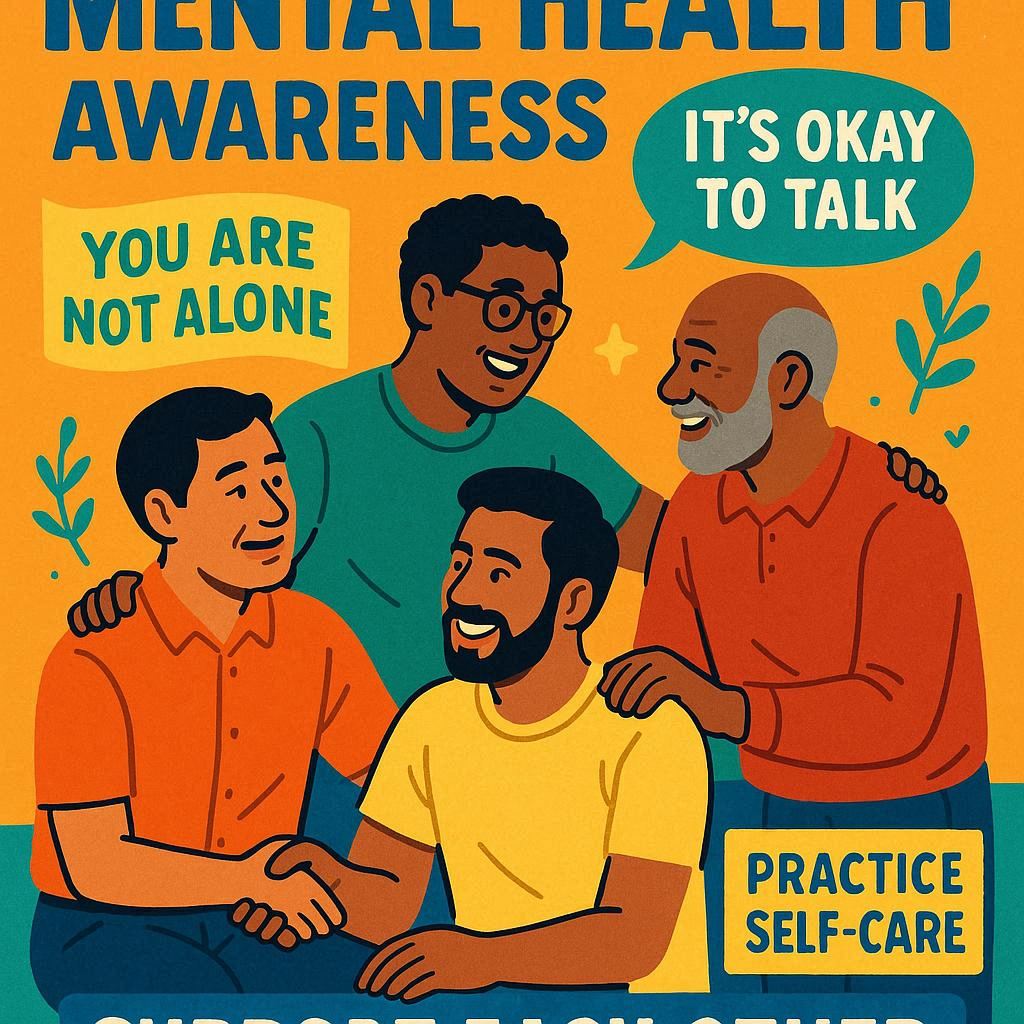
The State of Men’s Mental Health Today
The statistics speak volumes and may not be ignored. Men’s mental health isn’t just a private struggle; it’s a public health crisis.
Statistics on Men’s Mental Health Issues
Studies reveal that nearly 1 in 5 men experience some form of mental illness each year. Depression, anxiety and PTSD are prevalent but underreported. Even more disturbing is the fact that men are almost four times more likely to commit suicide, than women. This disparity is not due to men being more affected but since most of them do not seek help until it is too late.
Other trends entail the increase in the level of stress among working men, high levels of substance abuse and growing incidences of burn out. Older men are more reluctant to seek therapy despite the fact that younger generations have become more open to the idea.
Common Problems Men Live in Silence
Behind locked doors, millions of men are fighting secret wars. This can be as a result of work pressure, finances, relationship failure, fatherhood pressures, and even societal demands of success. Men are told to man up unlike women who are usually encouraged to share emotions. This causes them to bottle up their emotions, and that may come out as anger, irritability, or withdrawal instead of a direct expression of sadness.
The resulting cycle is dangerous; men fail to speak and the problems worsen and the outcomes may be disastrous. Breaking this silence is exactly what Men’s Mental Health Month strives to do.
Barriers to Men’s Mental Health
Why then do men not talk about it? The solution is the barriers (both external and internal) preventing men to seek help.
Stigma and Cultural Expectations
The stigma around men’s mental health remains one of the biggest barriers. Since childhood men are told things like, boys do not cry or real men are not weak. This cultural script makes men conceal pain, fearing that they will be thought of as weak once they acknowledge that there is a struggle. In the workplace as well, vulnerability may be construed as incompetence and this is why men are not likely to seek help in the open.
Gender and Emotional Suppression
The conventional masculinity is associated with strength as emotional control. Men are supposed to be providers, protectors and sources of stability. The feeling of failure may come with admitting to anxiety or depression when the latter is related to being a strong person in their families or communities. Unluckily, bottling up emotions does not make them disappear instead it intensifies the conflict.
Fear of Judgment and Inability to Find Safe Spaces
Fear of being judged is stronger than the necessity to get help in many men. They fear that they will be considered as not being stable or weak. Add to that there are few safe places where men can open up. Women are usually supported by their friends and social groupings but men lack such emotional attachments and this leaves them alone when they need support.
Men’s Mental Health Month works to dismantle these barriers, showing men that seeking help is a form of courage, not weakness.
Signs and Symptoms Men Can Not Afford to Ignore
One of the biggest challenges in men’s mental health is recognizing the signs. Unlike physical illness, mental health struggles often hide behind behaviors that are easily dismissed.
Emotional Marks of Stress
Men might not necessarily express their sadness, but their feelings will be manifested in other forms. Signs would be irritability at all times, anger or withdrawal towards loved ones. Men may seem to be numb, detached or uninterested in things they used to enjoy. These mood swings are not mood swings, they can be red flags to underlying problems.
Physical and Behavioral Signs
Mental health doesn’t only live in the mind—it affects the body too. Fatigue, sleeping difficulties or headaches or digestive issues may be signs of stress or depression. Behaviourally, men resort to alcohol, drugs or risk taking behaviour as a coping mechanism. These are some behaviors that are usually ignored as bad habits, but they may be cries of help.
When to Get Professional Help
The golden rule is the following: when the symptoms continue and disrupt everyday living, it is time to find help. Having trouble focusing at work, being bogged down by trivial obstacles or being unable to shake feelings of despair are all red flags. Unfortunately, a lot of men wait till they are in crisis. Early treatment does not only alleviate suffering but also avoids a progression to more serious conditions

The Significance of Early Intervention
Catching mental health issues early is like stopping a small fire before it spreads—it prevents long-term damage and saves lives.
How Crisis Can Be Prevented by Early Support
Early treatment assists men to cope with the symptoms before they escalate A man who consults counseling when he first experiences stress can avoid further development of the problem into burnout or depression. Just like regular checkups for physical health, mental health check-ins can serve as preventive care.
The role of family and friends in noticing warning signs
Usually, men fail to acknowledge that they are not doing well but people around them can see a difference. Family and friends play a critical role in spotting warning signs—whether it’s withdrawal, irritability, or unhealthy coping behaviors. In some cases, it is possible to encourage a man to use professional help with the help of a calm talk.
Early openness in men.
The most important thing is encouragement Rather than pressuring men by uttering such phrases as “just talk about it,” it is more effective to provide them with real support. Being open-ended, listening without a judgment, and reminding them that therapy is not a weakness, but maintenance can make a world of difference. One of the most powerful options to prevent crisis is normalizing therapy and self-care in men.
Strategies for Improving Men’s Mental Health
Good mental health doesn’t just happen—it’s built through consistent habits, healthy coping strategies, and openness to professional support.
Building Healthy Coping Mechanisms
When men are stressed out, they tend to resort to numbing activities such as drinking, working too hard or isolating themselves. Although these alleviate the situation in the short term, they aggravate the situation in the long term. Healthy coping mechanisms can transform how men handle pressure. Exercise, writing, contemplation, or even going outside is an effective way of doing so. Other easy but effective coping skills include talking to close friends, indulging in hobbies, and being thankful.
Coping strategies are not universal. Some men might need a high-energy release such as sports or weightlifting, whereas others might relax through creative endeavors such as painting or music. The aim is to identify some regular, healthy ways to release stress that do not harm.
Therapy and Counseling Options of Men
Men stigmatize therapy but it is one of the best tools to healing. Contemporary counseling is not merely getting on a sofa and talking about problems but a practical platform to learn problem solving skills, develop resilience and reframe negative thoughts. Cognitive Behavioral Therapy (CBT), for example, teaches men how to stop engaging in destructive thought patterns, whereas group therapy gives men a sense of community with others that experience similar battles.
Online counseling has also increased accessibility of counseling. Men who are reluctant to walk into the office of a therapist can now reach the therapist in the comfort of their own homes. This flexibility eliminates one of the biggest obstacles and makes more men take the first step.
The Significance of Exercise, Diet and Sleep
Physical health and mental health are deeply intertwined. Endorphins released by regular exercise decrease the level of stress and improve mood. Even 30 minutes of daily walking can improve mental clarity and emotional stability. A healthy diet with lots of whole foods can nourish the brain, whereas unhealthy nutrition can aggravate mood swings and exhaustion.
Another very important but overlooked factor is sleep. Men who trade sleep to work or entertainment usually experience increased stress, temper and inability to concentrate. The quality of sleep is also prioritized and it makes the brain resilient to stressful emotions. In short, mental fitness is built the same way as physical fitness—through consistent, intentional care.
The Role of Relationships in Men’s Mental Health
Relationships are used as mirrors to define how men feel about themselves and the world. Healthy relationships can strengthen mental wellbeing, while toxic ones can amplify struggles.
How Friendships Influence the Emotional Wellbeing of Men
Friendships are an essential part of emotional resilience, and men tend to have trouble keeping these deep, vulnerable friendships. Most friendships are based on activities such as sport or gaming, but do not provide opportunities to talk about the self. This superficial kind of bonding deprives men of a place to go when they have emotional problems.
Good male friendships, however, offer protection to open up in vulnerability without ridicule. It can help greatly to feel less lonely; however, it is sufficient to have at least one close friend who will listen without judgment. Asking men to check on one another and not just through chit chat will help normalize emotional openness.
The Effect of Romantic Relationships
Romantic couples usually become the main source of emotional support to men which may be both constructive and overwhelming. A healthy relationship fosters communication, stability, and mutual care. But when men depend on a partner as the only source of emotional support, it becomes unbalanced and strains.
Divorces, breakups, or tense relationships are also traumatic to the men especially when they do not have other means of support. That is why men need to make sure they have a variety of support networks (friends, mentors, therapists) so that when their relationships break down, they do not end up feeling emotionally isolated.
Fatherhood and Mental Health
Fatherhood brings immense joy but also unique mental health challenges. New dads can also experience sleep deprivation, financial pressure or identity changes that can cause anxiety or depression. Yet society rarely acknowledges paternal mental health struggles, focusing more on mothers.
It is important to recognize dad burnout Fathers who prioritize self-care, communicate openly with their partners, and build supportive networks are better able to navigate fatherhood without sacrificing their mental health. By speaking about these challenges, we reduce the stigma and create healthier family dynamics.

Work, Stress, and Men’s Mental Health
Work is an identity issue to many men: they associate their jobs with their self-worth. But when work becomes overwhelming, mental health often suffers.
Career Pressure and Burnout in Men
Men are under a lot of pressure concerning their career expectations. The cultural narrative of being the “provider” can push men to overwork, even at the cost of health and relationships. Long hours, stress, and fear of failing results in burnout which results in fatigue, irritability, and loss of motivation.
Burnout is more than being tired: it is a form of emotional exhaustion that can lead to depression, as well. Recognizing this early and setting boundaries is crucial for sustainable careers and mental wellbeing.
The Role of Work-Life Balance
Achieving work-life balance isn’t just a luxury—it’s a necessity for mental health. Men who balance time with family, hobbies and rest against work are more robust and emotionally stable. Unluckily, some males feel guilty of taking a break, as doing so is considered laziness.
Work and life balance must be pursued. Establishing limits on emails outside regular hours, taking breaks and using vacation time without feeling guilty are some of the little steps that can make a big difference. Employers also have a role in promoting balance as opposed to the glorification of overwork.
Employer’s Role in Supporting Men’s Mental Health
Workplaces can cause stress or promote wellbeing Employers who create open conversations about mental health, provide employee assistance programs, and normalize therapy benefits contribute to healthier employees. Simple initiatives like flexible schedules, wellness programs, and manager training on mental health awareness can significantly improve workplace culture.
By making men feel supported at the workplace, they will be more willing to get help before their breaking point. This change is beneficial to both the employees and the organizations as a whole since it helps to reduce turnover and increase productivity.

Suicide Awareness among Men
Suicide is one of the most pressing issues in men’s mental health, demanding urgent attention.
Why Men Commit Suicide More than Women?
Suicidal death is much more common in men than in women. This does not imply that men are more depressed, but they tend to use more suicidal means and are reluctant to seek assistance. Cultural stigma about being vulnerable leaves men alone and untreated depression may progress to suicidal thoughts.
The other reason is that men tend to conceal suicidal intentions with anger, carelessness or drug addiction, which makes it more difficult to identify the danger. These are silent wars, which end in devastating consequences, once they are too late to intervene.
Warning Signs of Suicidal thoughts
Learning of warning signs can save a life These may include abrupt loss of interest in family and friends, giving away possessions, saying that life is hopeless, or that he or she is a burden. Other warning signs include uncharacteristic risk-taking, extreme mood swings, and the use of substances.
It is necessary to mention that occasionally the signs are not so noticeable thus the reason why frequent check-ups and open communication are essential. Direct questions, such as, Are you thinking about hurting yourself? are awkward but have been demonstrated to reduce, rather than increase, the risk of suicide.
Prevention Strategies of Suicide
The prevention of suicide needs community work On an individual level, listening without judgement, encouraging therapy, and maintaining relationships with loved ones are effective measures. On a societal level, increasing access to crisis hotlines, mental health education, and reducing stigma are essential.
Programs like “Movember” and other men’s mental health campaigns have successfully raised awareness about suicide prevention. However, awareness should be put into practice- checking up on a friend, offering resources, and making therapy a normal thing to do.
How Society Can Support Men’s Mental Health
Men’s mental health is not just a personal issue—it’s a societal one. When men are healthier mentally, families, workplaces, and communities thrive. There is a need to work collectively in order to establish an atmosphere within which men will feel free to express themselves.
Busting Stereotypes and Reconstructing Masculinity
The conventional masculinity usually states that men need to be unemotional, independent, and closed off. Although, strength and resilience are good qualities, they should not be associated with emotional silence. The definition of masculinity should be changed in society that it should also include vulnerability, empathy, and openness.
The campaigns that feature men sharing their feelings and emotions, famous people posting about their difficulties, and society talking about the issue are the necessary measures. Re-defining masculinity is about teaching boys and men that true strength is in balance- not suppression.
Community Activities and Awareness Campaigns
The local communities are very influential in the shaping of attitudes. Support groups, mental health workshops, and awareness events can provide men with safe spaces to share and learn. Sports clubs, religious groups, and community centers can be used to conduct discussions in which men are comfortable participating in.
Initiatives like “Movember” or “Men’s Health Week” not only raise awareness but also normalize conversations around depression, anxiety, and suicide prevention. When communities rally behind these efforts, they send a powerful message: men’s mental health matters.
Government and Policy Support
Governments can play a pivotal role by investing in mental health infrastructure. Policies that expand affordable therapy access, workplace mental health programs, and school-based mental health education can reduce stigma from an early age.
Special funding for men’s health initiatives ensures that unique challenges—such as suicide prevention and substance abuse treatment—receive targeted attention. The laws that encourage work-life balance such as required paid vacation and work flexibility also help to decrease stress-related hardships in men.
Role of Technology in Supporting Men’s Mental Health
Technology has transformed access to support so that it is now quite easy to find help at the comfort of home.
Mental Health Apps and Online Therapy
Nowadays, there are hundreds of apps that help to meditate, track mood, and even use cognitive behavioral therapy. Online platforms such as BetterHelp and Talkspace enable men to talk to licensed therapists without having to travel long distances and without feeling stigmatized. These tools will provide a discreet start to therapy to men who may be reluctant to seek in-person therapy.
Apps also make daily mental health practices more accessible. Breathing techniques, journaling prompts, and guided exercises help men deal with stress as it happens. Technology is not a substitute to therapy, but a helpful addition.
Social media and its two-edged impact
Social media has advantages as well as disadvantages. On the one hand, it can help men find supportive communities, raise awareness, and deliver educational materials. Unrealistic measures of success, fitness and lifestyle, on the other hand, may aggravate stress and self-esteem problems.
Men should learn to manage their digital environments- follow accounts that produce positive energy and unfollow those that make them feel negative or compare themselves. Healthy social media habits can turn technology into a tool for wellbeing rather than a source of pressure.
Men Support Digital Communities
Online forums, podcasts, and online men groups provide comfortable places where men can be open without any fear of judgment. Communities like Reddit’s mental health forums or men’s support podcasts often provide relatable stories that break isolation.
Digital areas remind men that they are not alone When one puts his or her struggles online, it usually connects with other people who thought that they are alone and that only they face these problems. These communities are strong connection and healing tools.

Famous Men Speaking Out About Mental Health
Celebrities make a significant contribution to breaking stigma. When famous males open up about their difficulties, it indicates to others that vulnerability is not a sign of weakness.
Celebrities That Shared Their Difficulties
Actors, athletes, and musicians have become more and more open about depression, anxiety, and burnout. For example, professional athletes have spoken about the mental toll of competition, while actors have revealed battles with addiction and depression. Their authenticity aids in normalizing the discussions of the average men.
These confessions are important because they are contrary to the stereotype that successful strong men never suffer. World champions and popular icons can get help so why not any one.
The Impact of Public Figures on Awareness
The effect of celebrities coming out is enormous. The media coverage increases the message, social discussions grow, and more men are comfortable to admit their problems. Schools, workplaces, and communities also benefit from these examples, using them as teaching moments to encourage healthier discussions.
What We Can Learn in Their Journeys
The most important thing to learn is that asking help is not the last but the first step of strength. Well-known men tend to emphasize that they did not become weak when they went to therapy, took medication, or changed their lifestyles. These teachings give ordinary men a reason to be vulnerable and to view it as a means of healing rather than a sign of weakness.
How to Support a Man Struggling with Mental Health
The love of loved ones is usually the key between silence and healing.
Preparing to have the Conversation with Empathy
It is intimidating to initiate the conversation, but empathy helps. Rather than asking a straight question, such as, What is wrong with you? use a soft phrase such as, I have noticed that you seem stressed out these days, do you want to talk? Listening without solving and offering instant solutions makes men feel that they are being heard
Do not make dismissive remarks such as “man up” or “don’t overthink it.” These statements perpetuate stigma and drive men more into silence. What they require the most is a non-judgmental, safe environment where they can talk.
Providing Practical Help
Sometimes, words are not sufficient- actions count as well. Being able to assist with day-to-day tasks, taking them to appointments, or just calling to check in can communicate that the support is sincere. The simplest acts, such as inviting them to walk or eat can relieve isolation.
Promoting Professional Assistance Non- Questioningly
Most men fear to seek therapy since it is intimidating. Rather than insisting on the idea, propose it as a usual measure: “It could be a good idea to talk to someone and get some of the weight off your shoulder.” The normalization of the process can also be accomplished through sharing stories of other people who received benefits through therapy.
The aim is to support but not force. It can be helpful to remind men that therapy does not mean being weak but learning to cope with the tools.
Healthy Lifestyle Choices That Boost Mental Health
Small daily choices often create the biggest impact on mental wellbeing.
Strength of Exercise and Mindfulness
One of the strongest mood enhancers is exercise. It lowers stress hormones and elevates endorphins, which causes an antidepressant effect. Whether through weight training, running, or even yoga, physical activity builds resilience against mental struggles.
Mindfulness exercises like meditation and deep breathing assist men to cope with the overwhelming thoughts. As little as 10 minutes a day of mindfulness can reduce anxiety and increase attention. Such practices remind men that there is no need to be at war with their thoughts–that they can be learned to observe them with calmness.
Nutrition’s Role in Mental Clarity
Food comes directly to the mood and brain performance. Diets high in processed sugars and unhealthy fats can worsen depression and anxiety, while nutrient-rich diets support mental clarity. Lean proteins, Omega-3 fatty acids, fruits, and vegetables help the brain and stabilize the mood.
Even a basic thing like being hydrated contributes to energy levels and emotional stability. Nutrition is not about dieting-it is about providing the brain with the tools it requires to perform well.
The Value of Sleep and Rest
Sleep is the foundation of mental health, yet many men sacrifice it for work, entertainment, or stress. Unhealthy sleeping habits make one irritable, impairs decision-making and aggravates depression.
Building a sleep routine—consistent bedtime, limiting screens before bed, and creating a restful environment—can dramatically improve mental health. Rest is not idleness; it is upkeep. Without it, the body as well as the mind disintegrates.

Conclusion: Changing the Narrative Around Men’s Mental Health
Men’s Mental Health Month isn’t just about awareness—it’s about rewriting the story we tell ourselves and others about what it means to be a man. Silence has long been confused with strength and vulnerability with weakness. But in reality, true strength lies in honesty, in asking for help, and in building healthier ways of coping with life’s pressures.
The stigma surrounding men’s mental health is slowly breaking down, but there’s still work to do. It is all about the conversation, awareness campaign, every supportive gesture. By normalizing therapy, promoting healthier lifestyles, and creating safe spaces, we can ensure men no longer feel they must fight their battles alone.
To transform the story, it takes the effort of everyone- families, workplaces, governments, and communities, to encourage openness, to provide support, to fund accessible resources, and to accept vulnerability as a part of masculinity. When men thrive mentally, society thrives as a whole.
May this month be more than a month of awareness–may it be a month of action as well Reconnect with the males in your life. Check. Listen. Without judgment, support Since the mere presence there can be the difference between silence and healing.
FAQs
- What month is Men’s Mental Health Month observed?
Men’s Mental Health Month is observed in June in many countries, aligning with other initiatives like Men’s Health Week. The awareness campaigns can be differentiated by region.
- Why don’t men talk about mental health as much as women?
The cultural norms do not encourage men to be vulnerable. Most people are raised to believe that emotions are a sign of weakness and this creates stigma and does not allow people to open up.
- What can I do to help a man with depression?
Start listening without judgment and regularly check in and encourage small steps towards seeking professional help. Do not make dismissive remarks, but be patient and empathetic.
- Are there specific resources for men’s mental health?
There are hotlines, online therapy platforms, support groups and community programs specifically targeting men. Other awareness campaigns such as the Movember campaign raise awareness and offer resources.
- What role does masculinity play in mental health struggles?
Conventional notions of masculinity do not promote emotional expression and encourage men to conceal their problems. Redefining masculinity to include vulnerability and empathy helps reduce stigma and promote healthier coping.